
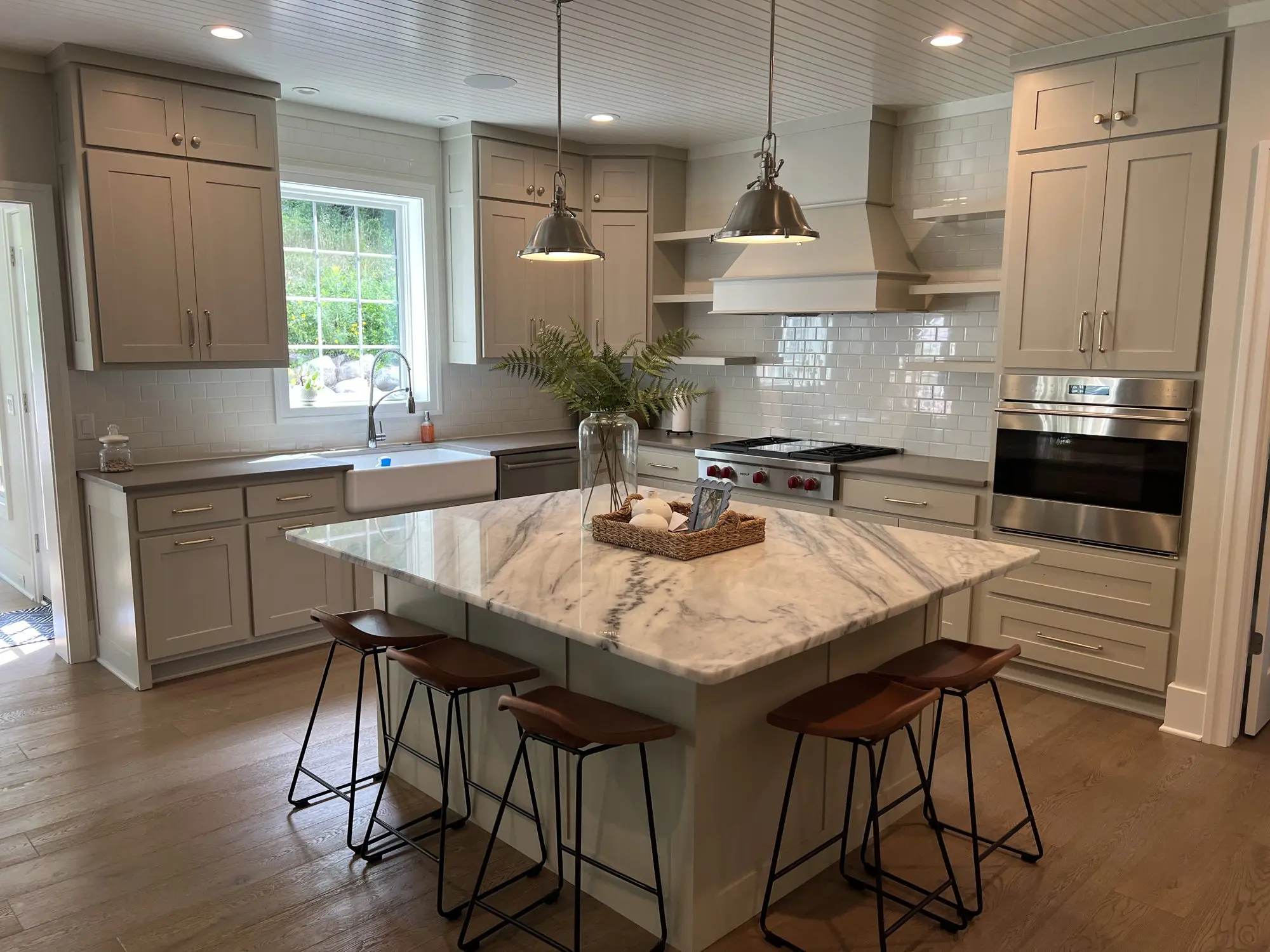
Before: An Ada Kitchen in Good Shape, Wearing a Color Nobody Chose
Most kitchen projects start with something broken. This one didn't.
The cabinets in this Ada home were white, solid, and arranged in a layout that worked fine for the people cooking in it.
Boxes were square. Doors hung straight. None of the dated bones that usually push a homeowner toward a gut job were anywhere in the room.
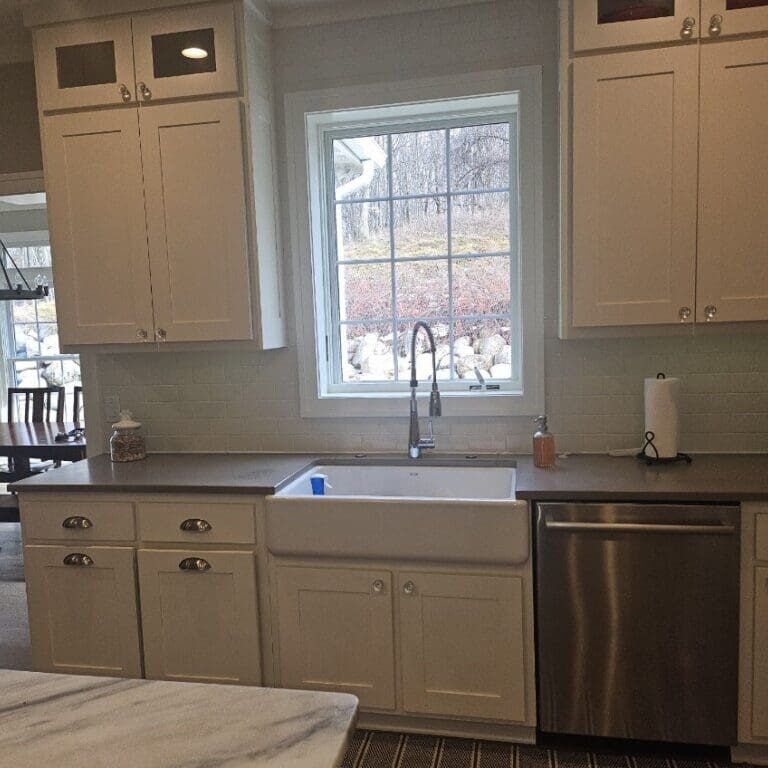
Color was the real complaint. White had never been the choice, and living with a color you didn't pick gets louder every year, not quieter. Up close, the wood had also gone rough along the edges of the doors and drawer fronts, the kind of wear that collects where fingernails, dish towels, and cleaning spray hit the same inch of surface a few thousand times.
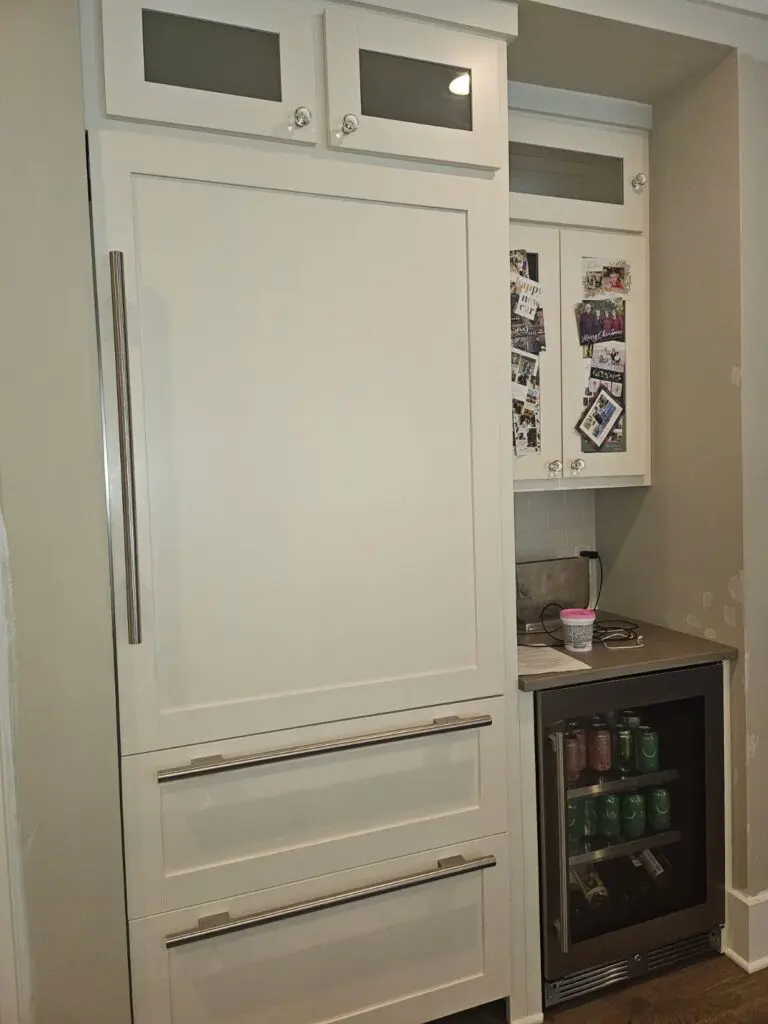
Then there was the glass. Several upper doors had glass panels, which look great in a showroom and less great when they put the inside of your cabinets on permanent display. Glass fronts turn dish storage into a styling job. The homeowner wanted solid wood fronts instead, so what's on the shelf stays on the shelf and off the wall.
Drawer boxes and hinges were on the list too. With every front coming off anyway, the inside of the cabinetry was the easiest time to upgrade it, and the homeowner wanted the function brought up to current standards while the kitchen was already open.
So the starting point was unusual in a good way: a sound kitchen, a short list of real complaints, and a homeowner who knew exactly what bothered them.
The Problem: A Kitchen That Needed an Update, Not a Demolition
What the homeowner wanted was a kitchen that felt brand new. What they didn't want was a remodel.
Those two things sound like a contradiction until you look at what a full tear-out actually costs. Pulling cabinets means pulling countertops. Pulling countertops often means touching plumbing, sometimes electrical, usually backsplash and paint. Then you wait on cabinet lead times, and the kitchen you cook in every night turns into a job site for weeks. For a room that was already laid out correctly, all of that spending goes toward rebuilding something that was never the problem.
A full kitchen renovation is the right call when a kitchen's layout fights the people using it, or when the boxes themselves are shot. Neither was true here.
That pointed straight at cabinet refacing. Refacing keeps the existing cabinet boxes and replaces everything you see and touch: doors, drawer fronts, hardware, finish. Layout stays. Countertops stay. The sink stays where it is. The visual change is close to total, because the fronts are most of what your eye reads as "the cabinets" in the first place.
Cabinet refinishing was the other option on the table, and it's an excellent one when the existing doors are in good condition and the homeowner just wants a color change. Here the doors had rough edges and several had glass panels that needed to go. Sanding and recoating those doors would have left the same door profiles, the same glass openings, and the same worn edges under a new color. Replacing the fronts outright solved the color, the texture, and the glass in one move.
The decision wasn't about saving money for its own sake. It was about spending it on the parts of the kitchen that were actually bothering someone.
The Solution: A Full Cabinet Reface With Upgraded Function Inside Every Drawer
The plan had six pieces. Each one targeted a specific complaint, and none of them required the homeowner to live without a kitchen.
Custom Wood Doors and Drawer Fronts From a Local Shop
Every door and drawer front in the kitchen was replaced with a custom wood front built by a local wood shop. Not a catalog door ordered by the box, and not a laminate skin glued over the old one. New wood, cut for this kitchen's openings.
Going custom and going local did two things at once. The fronts match the existing openings exactly, with no filler strips or compromises to force a stock size to fit. And the glass-panel doors on the uppers came back as solid panels, which was one of the homeowner's specific asks from the first walkthrough.
A Sprayed Tyler Gray Finish Applied in the Shop
New fronts were sprayed in the shop with Novalk USA wood coatings in Tyler Gray.
Spraying off-site matters more than most homeowners expect. A shop has controlled dust, controlled temperature, and room to lay doors flat so the coating levels the way it's designed to. That's how you get an even, factory-grade surface with no brush marks and no texture, which is close to impossible to replicate with doors hanging in place over a working kitchen.
Novalk's wood coatings are built for cabinetry and furniture manufacturing, with low VOC and HAPS content and finishes rated for scratch and chemical resistance. On a kitchen, that resistance is the whole point. Cabinet fronts take grease, cleaner, water, and knuckles every day, and the coating is the only thing standing between all of that and the wood.
Tyler Gray replaced the white the homeowner had never wanted. It reads as a warmer, more current neutral than bright white, and it holds up visually against the daily smudges that show on a white door within hours.
New Dovetail Drawer Boxes Throughout
All of the drawer boxes came out and new dovetail boxes went in.
Dovetail joinery interlocks the sides of the box with the front, so the joint holds itself together instead of relying on staples or glue alone to resist being yanked open a few times a day for the next twenty years. It's the construction detail cabinet makers point at when they talk about a box lasting, and it's usually the difference between a drawer that stays square and one that racks over time.
This is also the part of a reface that homeowners don't expect to be included. Fronts are the visible upgrade. New boxes underneath are the one you notice every single time you open a drawer.
Blum Soft-Close Hinges and Drawer Hardware
New Blum soft-close hardware went on every drawer, and Blum soft-close hinges went on every door.
Blum is the hardware most cabinet shops reach for when the goal is a mechanism that still works smoothly years in. The soft-close action catches the door or drawer at the end of its travel and pulls it shut quietly, which eliminates slamming entirely. That's a comfort upgrade on day one and a protection upgrade over time, since the fronts and boxes stop absorbing the impact of being shut hard.
For a kitchen with kids, dogs, or anyone who cooks fast, it's one of the most noticeable changes in the room.
New Handles and Pulls Across the Whole Kitchen
All-new handles and pulls finished the hardware side.
Pulls are the jewelry of a kitchen, and they're also the only part of the cabinetry you physically touch every day. Replacing every one of them keeps the finish consistent across the room, which is where a partial hardware swap usually falls apart. Mixed metals from three different eras read as an afterthought, and nobody wants their new kitchen to look like a repair.
Custom Organizers Built Into Select Drawers
Custom organizers were built into several of the new drawers.
This was the add-on that mattered most to the homeowner once the job was done. Organizers turn a deep drawer from a pile into assigned space: knives where knives go, utensils separated, spices visible instead of buried three rows back. A kitchen that's organized at the drawer level simply works faster, and that benefit arrives every single day rather than only when you walk in and look at the color.
Before & After
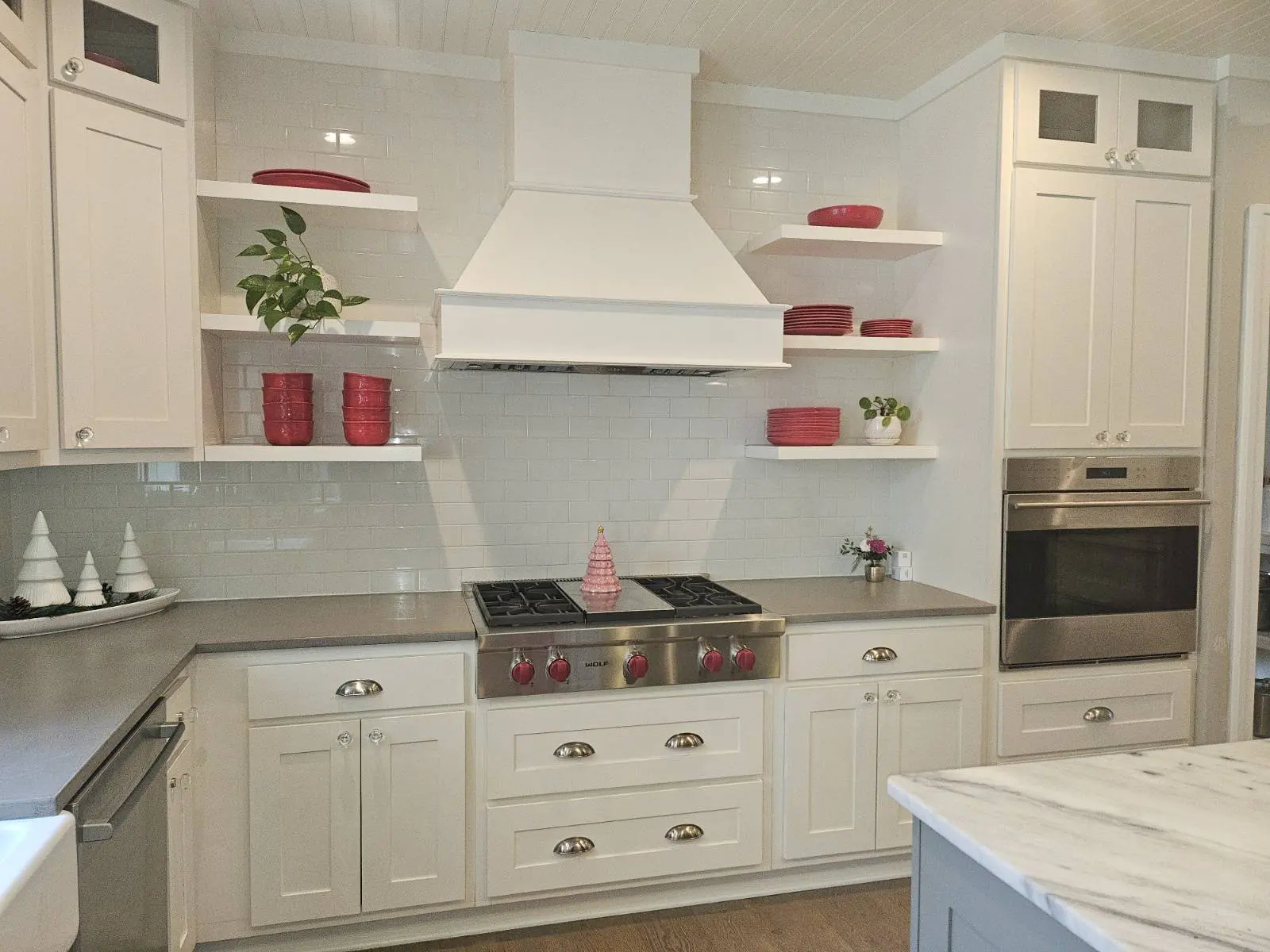
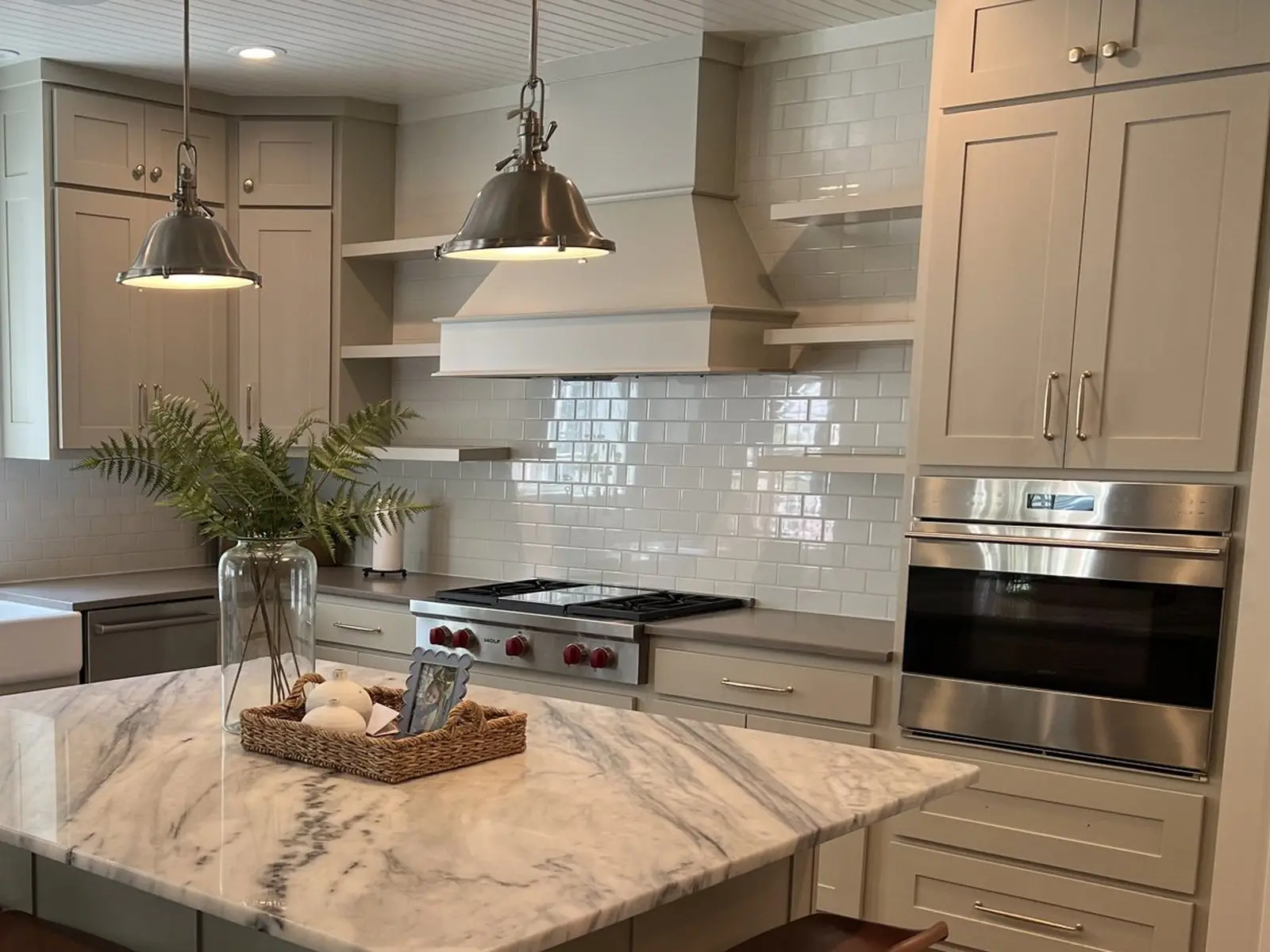
After: A Kitchen That Looks New and Works Better Than It Used To
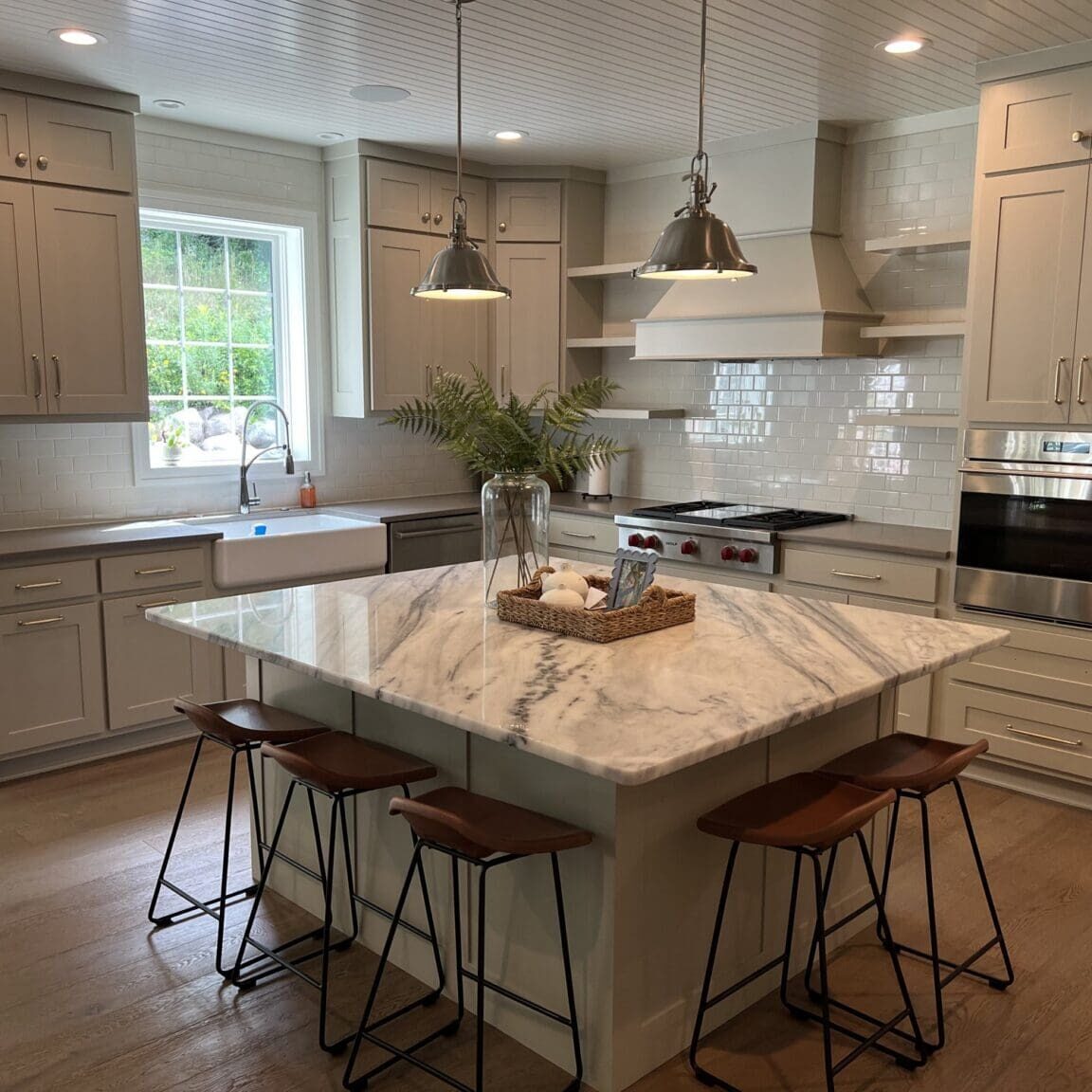
The finished kitchen reads as new construction, not as a repair.
Tyler Gray fronts gave the room the updated, slightly warmer look the homeowner had been after since before they called. Solid upper doors cleaned up the sight lines where glass panels used to break them up. Edges that had gone rough are now crisp, sprayed surfaces with an even sheen all the way around.
Function took the bigger leap. Drawers glide and close themselves. Doors shut quietly instead of banging. Dovetail boxes feel solid under a load of cast iron. The organizers were the detail the customer called out specifically, which tracks, because they're the upgrade you interact with every time you cook.
What stayed the same is worth saying out loud: the layout, the countertops, the plumbing, and the cabinet boxes the kitchen was built around. None of it was touched, because none of it was the problem. That's the entire case for refacing a kitchen that's structurally fine and cosmetically tired.
You can see more finished kitchens in the project gallery, including refinishing work where the original doors were worth saving.
Cabinet Refacing in Ada, MI and Across Kent County
This project was completed in Ada, MI, in Kent County, and cabinet work in Ada is a regular part of the schedule rather than an occasional trip out of the service area.
TNC Painting has worked out of Grand Rapids since 2016, when Troy and Nicole Cullin started the company. It's stayed family-owned and family-run the entire time, which on a job like this one means Troy or Nicole is the person who walks your kitchen, prices the work, and stays reachable while it's happening. Your project doesn't get handed to whoever has an open week.
The focus has also stayed deliberately narrow. Cabinet refacing, cabinet refinishing, kitchen renovation, and interior painting are the whole list. No general contracting, no bouncing between trades. That's a large part of why a reface like this one comes back looking like finished cabinetry instead of a repair: the same crew does this work week after week and knows exactly where it goes wrong.
Estimates are free and done on site, which matters more on cabinet projects than almost anything else. Door style, finish color, hardware, and the choice between refacing and refinishing all depend on what the existing boxes actually look like. The office and showroom at 6051 Division Ave S in Grand Rapids exists for the same reason, so you can see door styles and finishes in person instead of committing to a color on a screen. TNC Painting is licensed and insured.
Products and Techniques Used on This Ada Cabinet Reface
Custom wood doors and drawer fronts. Built by a local wood shop, sized to the existing openings, with solid panels replacing the previous glass-panel uppers.
Novalk USA wood coatings in Tyler Gray. Sprayed in-shop for an even, factory-grade surface. Novalk's wood line is formulated for cabinetry and furniture, with low VOC and HAPS content and scratch and chemical resistance suited to daily kitchen use.
Dovetail drawer boxes. Every original box replaced with new dovetail-joined construction.
Blum soft-close hardware. Soft-close drawer hardware and soft-close door hinges throughout.
New handles and pulls. Replaced on every door and drawer for a consistent finish across the room.
Custom drawer organizers. Built into select drawers to assign space for utensils, tools, and everyday items.
Ready to Talk About Your Own Kitchen?
If your cabinet boxes are solid and the layout works, a reface gets you a new kitchen without the demolition, the lead times, or the month of takeout. Call (616) 300-1944 to talk it through, or start your own cabinet reface with a free quote.